Release 2025-12-31
This release focuses on improving the Dashboard experience and introducing clearer, more consistent status handling across both the API and the user interface.
Platforms now benefit from a more streamlined way to browse checkouts and payments in the Getpaid Dashboard, with key insights surfaced at a glance and simplified, intuitive, statuses that make it easier to understand and reason about payment states.
Streamlined Dashboard experience
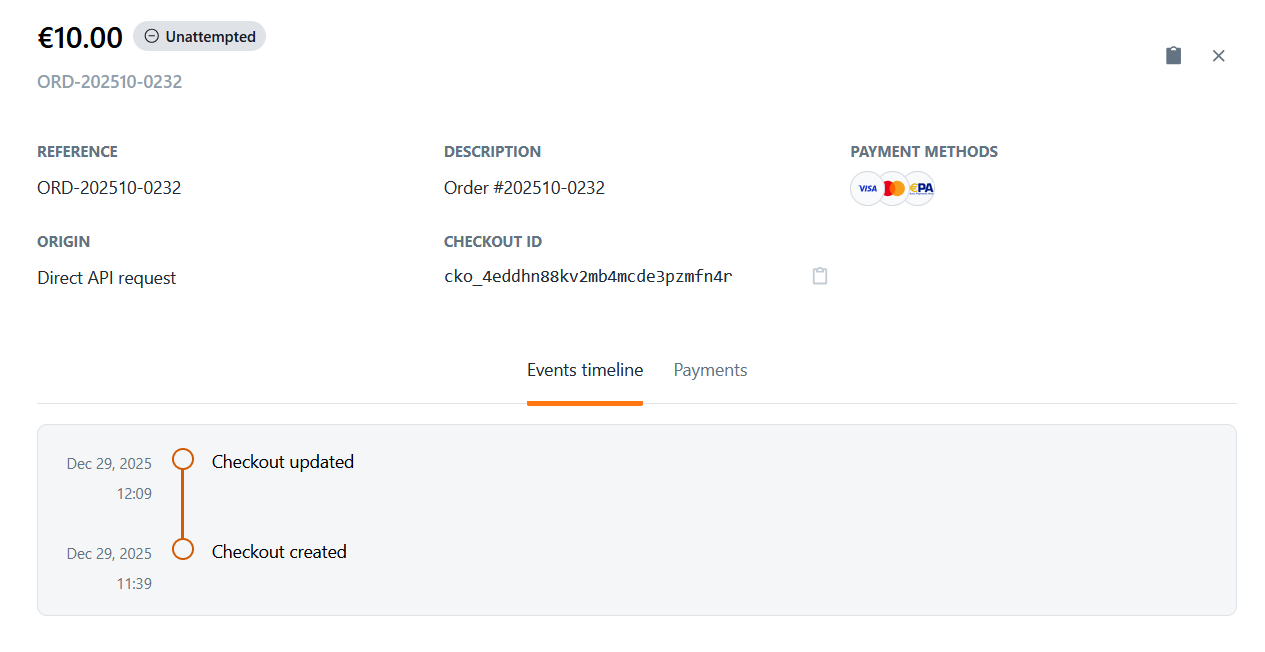
The Dashboard now offers a simpler and more streamlined experience, allowing platforms to focus on key operational information while still having access to detailed data when needed. Navigation between checkouts and payments is more intuitive, with clear entry points that make it easy to move across modules. Resource IDs can also be quickly copied for integration or further use.
This aligns with the goal of providing an approachable and efficient experience across the Dashboard.
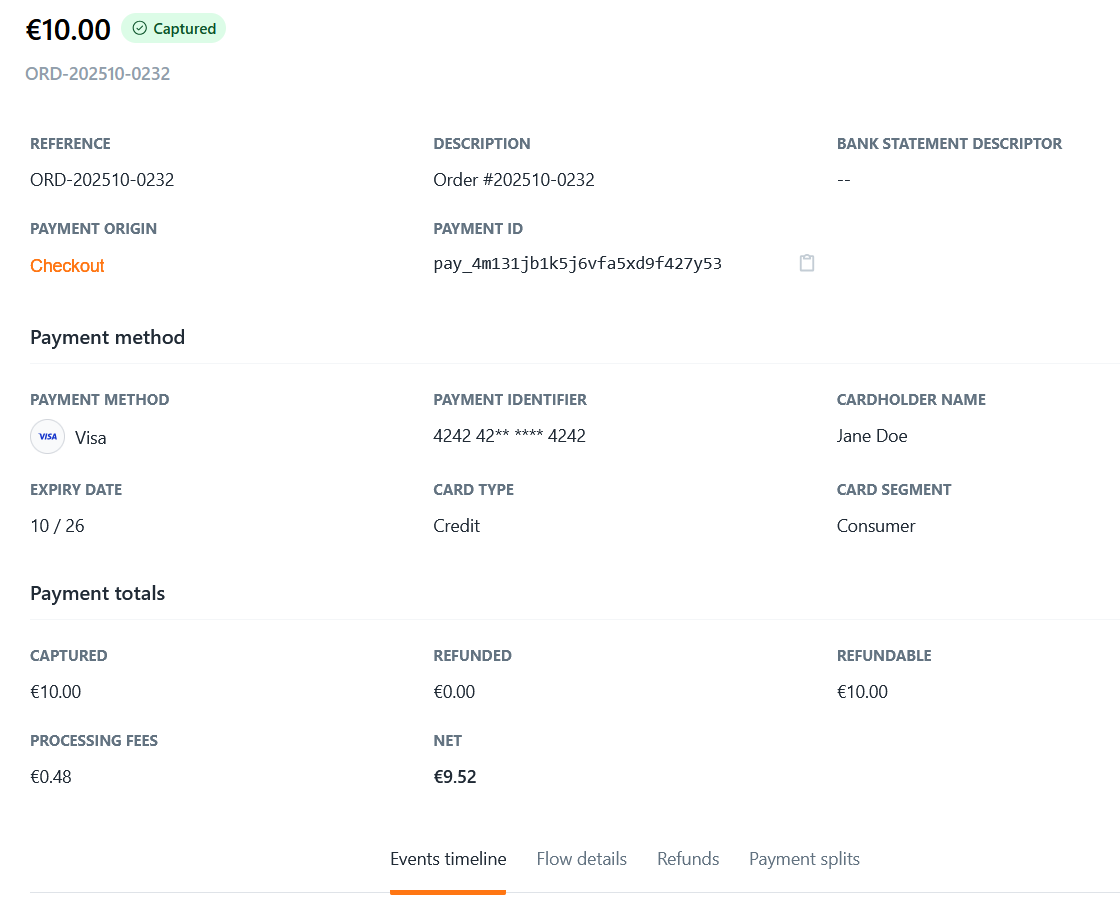
Both screens provide a consistent and familiar experience when navigating between modules.
Additionally, the payment details screen has been updated to include the card type and segment for credit card payments. These might not be fully available until the payment process is finalized.
Simplified status handling
To simplify operational workflows, payment statuses have been streamlined while still preserving access to detailed context when needed. Statuses are now more consistent and easier to reason about, with additional information exposed through structured fields.
Previously, some payment states were represented as highly specific statuses:
{
    "id": "pay_4a4m2pjycdb1jbj68h1rvk9kcz",
    "status": "authentication_required",
    [...]
}
Now, these cases are grouped under a simplified high-level status, with more granular context provided through a dedicated reason object:
{
    "id": "pay_4a4m2pjycdb1jbj68h1rvk9kcz",
    "status": "action_required",
    "reason": {
      "code": "authentication_required",
      "details": "Buyer authentication is required"
    },
    [...]
}
This approach makes it easier to understand the payment state at a high level, while still allowing platforms to access precise details when needed for logic, messaging, or troubleshooting.
See payment statuses and transitions for more details.